

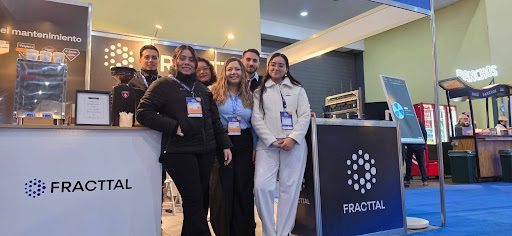

Buenos Aires’ La Rural drew more than 15,000 visitors and 250 exhibitors to the Blue Pavillion on August 25-27, for the fourth edition of the National and International Expo of Industries and Services. Running alongside it was the 7th Industrial Congress, organized by Argentine Small and Medium-Sized Industrialists (IPA), with sessions on financing, industrial development incentives, and management tools for SMEs.
Amid widespread macroeconomic debate that dominates most industry conversations in Argentina today, several speakers made a narrower argument: that competitiveness starts inside the plant not outside it.
Daniel Salamone, president of CONICET, the Argentinian National Scientific and Technical Research Council, made the case in his talk “From the Laboratory to the Factory: Science, Technology, and Innovation to Produce More,” arguing that applied innovation can raise productivity without new capital investment.
A separate panel made a related point. In “The Future of Industrial Clusters: Competitiveness and Collaboration for SMEs,” Rubén Geneyro, Alejandro Bartalin, and Gabriel Sánchez argued that SMEs don’t need to grow bigger to compete. They just need to coordinate better with each other.
Both discussions kept circling back to the same idea: productivity isn’t only about buying more. It’s about running what you already have better, organizing it, monitoring it, keeping it maintained.
A plant with the same machines it had last year can still produce more, if those machines sit idle less, or if the people on the floor have better information when they need to make a call.
The real cost
Unplanned downtime is expensive. Studies put the cost at around $260,000 an hour, more in sectors like automotive, where a stalled line can bleed money fast. An idle machine doesn’t care what the exchange rate is doing, or what’s in the latest industrial policy. That cost lands regardless. What it does care about is management.
The adoption gap behind that cost is significant in Argentina. According to a survey by the nadIA initiative, 41.6% of SMEs already use some form of artificial intelligence, but its application remains largely limited to administrative and communications processes rather than production.
The industrial sector lags further. A study by Accenture and the Argentine Industrial Union (UIA) found only 27% of companies in the sector use AI to automate processes.
The technology to manage assets more effectively, however, already exists. The gap is in adoption on the plant floor.
The paper trail that got digitized
Fracttal’s presence at the Expo reflected that same argument. Speaking for the company, Ignangellys Salazar, marketing manager for the Southern Cone and the Andes at the company, pointed to the case of Arca Continental Argentina, which integrated Fracttal One with its SAP PM module through native APIs and the Fracttal Hub connector, replacing paper work orders with digital, mobile field management.
As per the company, the result was a 54% reduction in Mean Time to Repair (MTTR), and a 63% increase in Mean Time Between Failures (MTBF), without expanding the plan or adding new assets.
On a smaller scale, it’s the same argument that ran through the innovation and cluster panels: industrial competitiveness doesn’t always require a new plant or a different macroeconomic environment. Resource management improves when systems are upgraded from the inside out.
The takeaway for Argentina’s SME sector is concrete. Before waiting on the broader business environment to shift, companies can audit how digitized their own maintenance and asset-management processes are, and prioritize tools that give real-time visibility into equipment condition.
Argentina’s low industrial adoption rate, 27% per the Accenture/UIA figure, is also an opening. Companies that move first toward smarter asset management gain an edge that no policy change can hand them.
Featured image: courtesy of Fracttal
Disclosure: This article mentions a client of an Espacio portfolio company.