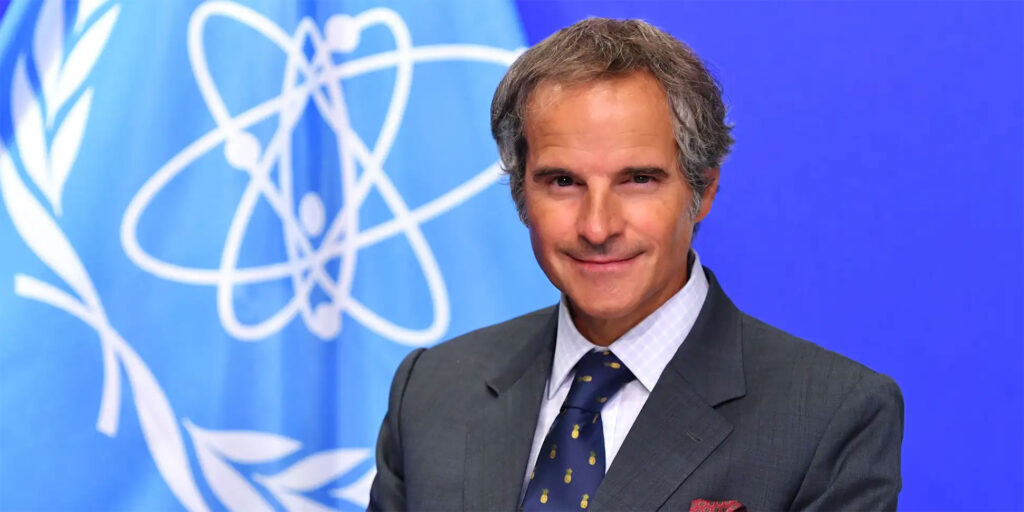

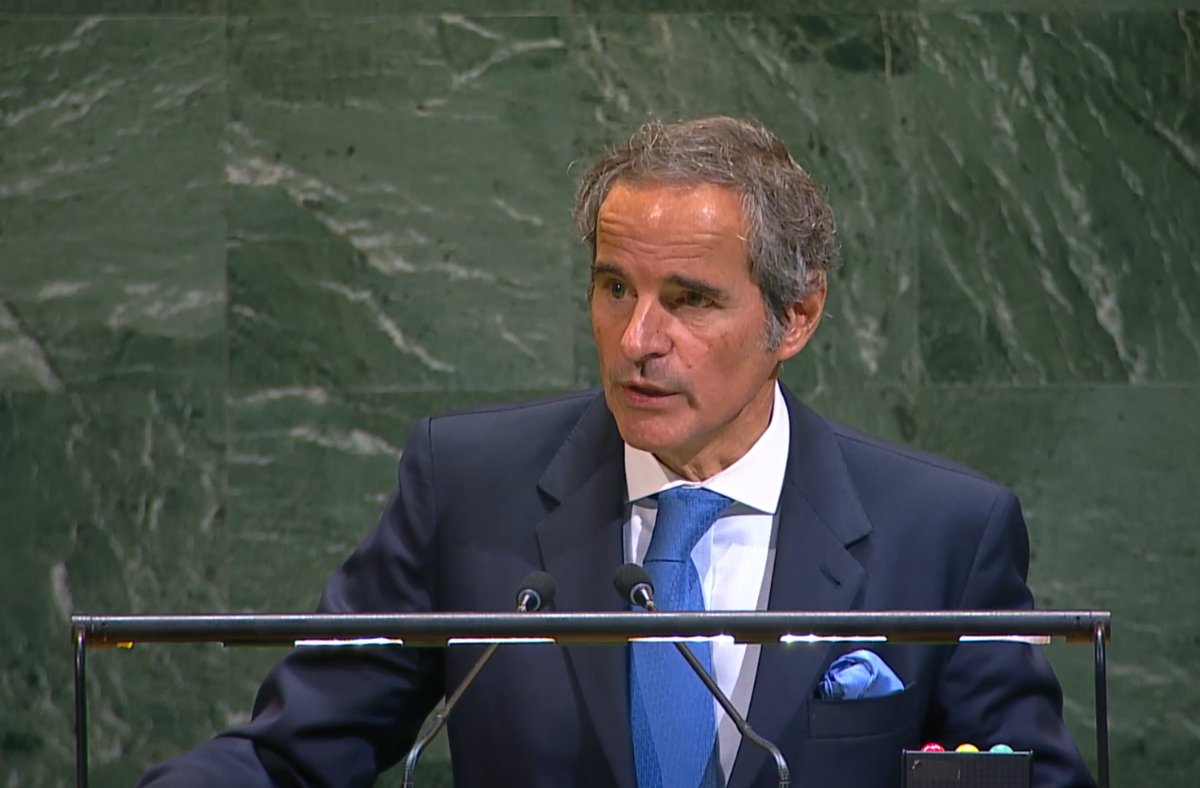
Buenos Aires, Argentina — Rafael Grossi formally stepped into the United Nations (UN) race to succeed Secretary General António Guterres at a moment he describes as one of “tremendous fragmentation” in global politics. The Argentine diplomat, head of the International Atomic Energy Agency (IAEA) since 2019, sees the current geopolitical landscape as shaped by overlapping conflicts, weakened alliances and widespread suspicion, a “tariff war,” and a growing nuclear deterrence mindset that is pushing an increasing number of countries to desire “the nuclear button.”
Behind this scenario lies what he considers one of the main challenges: the fragile legitimacy of multilateral institutions, especially after failing to prevent—or end—major international conflicts such as in Ukraine or Gaza. “The UN is in a profound crisis of credibility,” Grossi affirmed in an exclusive interview with Perfil, later adapted for Argentina Reports.
Conscious of the unpredictable shift in global order, he warned of the organization’s growing irrelevance amid escalating nuclear tensions and the turn toward a multipolar world. “The United Nations is absent from all the major crises today. This cannot continue,” he stated, adding that 80 years after its creation, the organization remains “indispensable” for global security and peace.
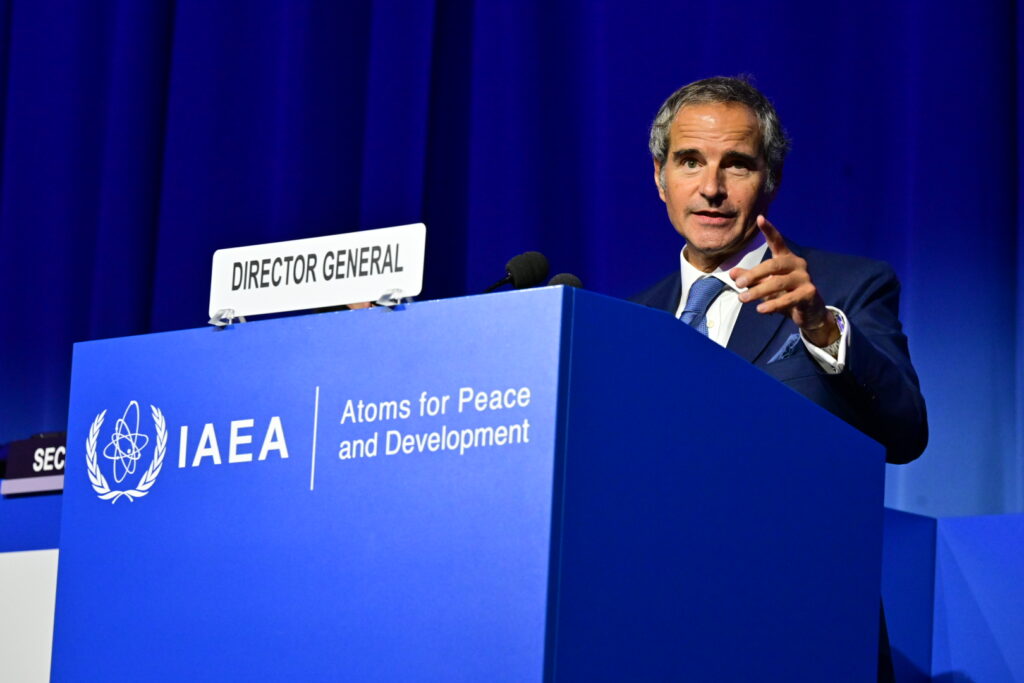
At 64, Grossi is the first Latin American to lead the UN’s nuclear watchdog after four decades serving as an Argentine diplomat —a trajectory he often reflects on through his active social media presence. His candidacy for UN secretary-general, the highest role in global diplomacy, was formally endorsed by the Argentine government in late November and will be presented publicly in Buenos Aires on December 22, in an event sponsored by the Argentine Council for International Relations (CARI).
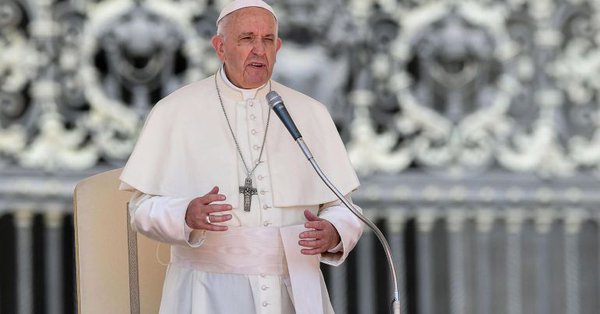
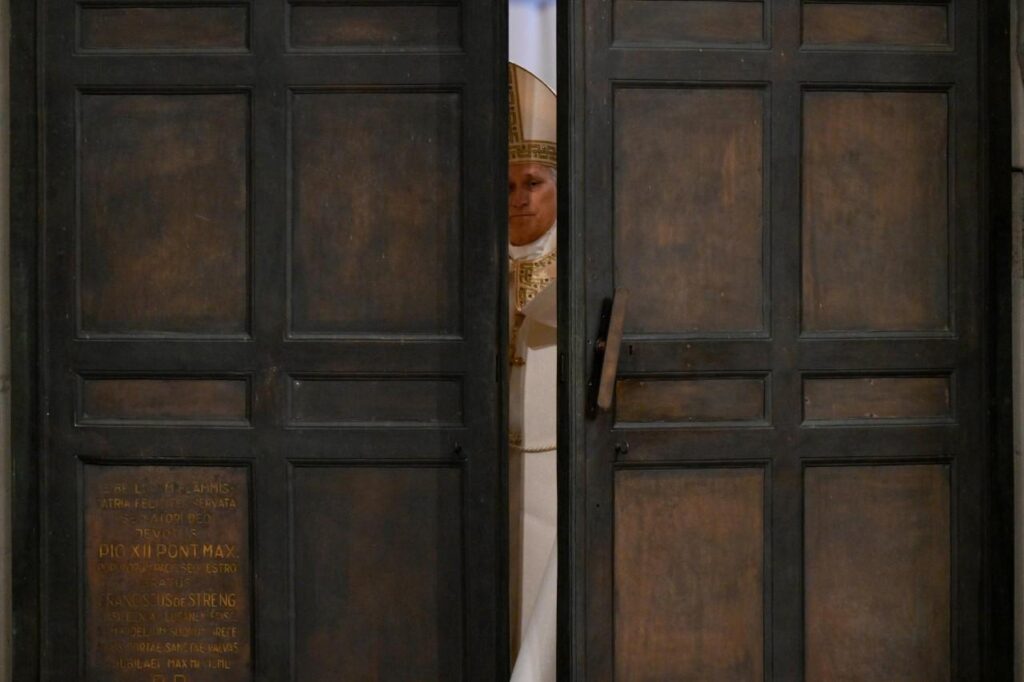
From that stage, Grossi —who laughs when asked about the nickname “the nuclear Pope,” a nod in Argentine diplomatic circles to Pope Francis— is expected to outline a vision for a UN that, he believes, needs a different kind of leadership at a moment of global shift, where even historically “peaceful regions” are at stake, such as Latin America, which is now unsettled by new tensions in the Caribbean between the U.S. and Venezuela.
“My conviction was forged through my experience leading an organization like the IAEA, where I have dealt with high-tension international crises —in the Middle East, Iran, Syria, and of course the conflict between Russia and Ukraine”. Those experiences, he argues, offer an advantage in addressing the UN’s current weaknesses. “If you look at Gaza, South Sudan, the Caucasus, India and Pakistan, Cambodia —the common denominator is the absence of the United Nations. This cannot continue”.
Grossi’s proposal, he states, is to restore what he sees as an abandoned responsibility: the UN’s central role in managing peace and international security. “We must make it credible and effective again”, he insisted.
He also spoke about the death threats he received during the war between Israel and Iran —which is why he remains under protection— and described with concern the critical state of the Zaporizhzhia nuclear plant in Ukraine, despite ongoing conversations with both parties. “I have a specific role in this case: to protect the international nonproliferation regime and prevent a nuclear accident. It requires me to engage in dialogue with everyone”.
Grossi’s analysis of economic and political global shifts
In his analysis, Grossi describes a shifting center of economic gravity toward Asia but warns against overstating the idea of a simple “power shift.”
“Naturally, with economies like China, India, Japan, and Southeast Asia, there is a significant portion of global GDP in that region,” he explained. Argentina, he insisted, must refine its economic intelligence given the importance of these markets.
But he adds that economics cannot be decoupled from politics: “In historical times like these —with wars, conflicts, and Indo-Pacific tensions— a purely economic reading is insufficient. You need an international political perspective.”
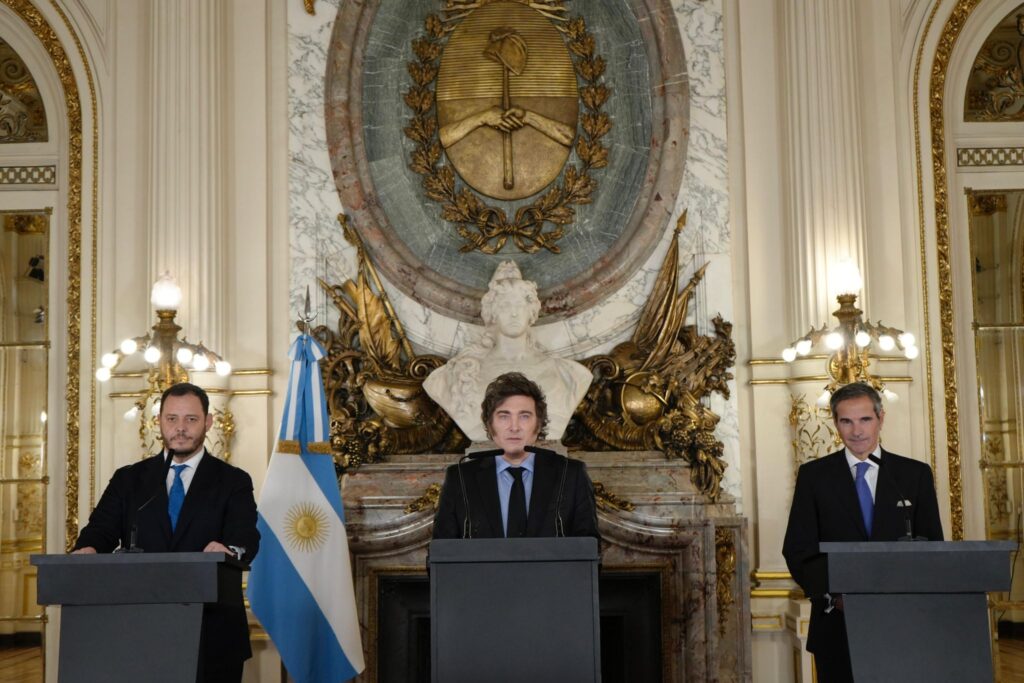
The UN nuclear chief close to President Milei
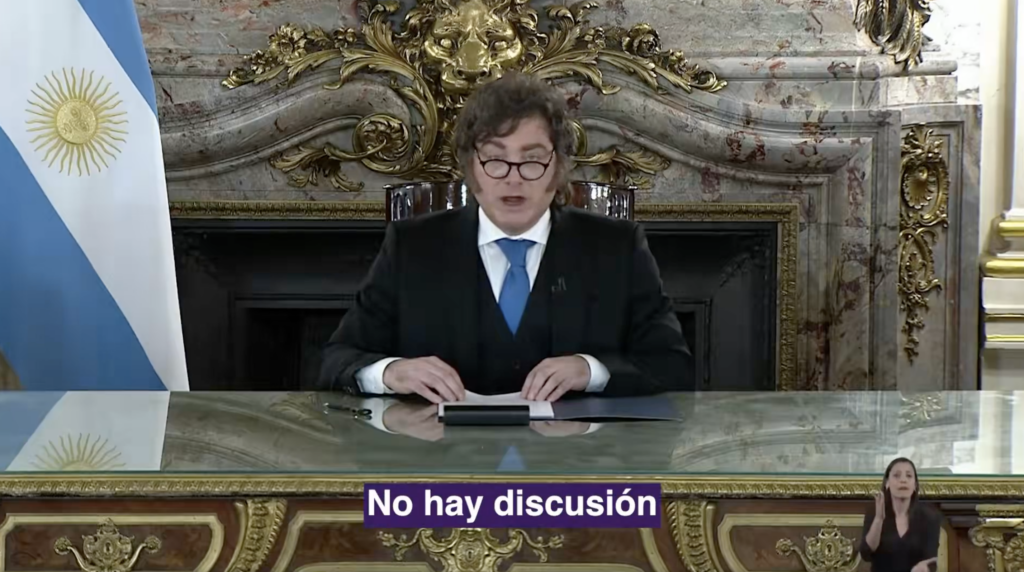
One of the domestic debates Grossi addressed was Argentina’s nuclear program and its close relationship with the United States, a key axis of Argentine foreign policy under President Javier Milei. This involves not only deep financial cooperation —as seen with the bailout announced by Scott Bessent— but also coordination in critical areas such as military and nuclear development. When asked about criticism from parts of the Argentine opposition that the recently signed FIRST agreement with Washington implies a loss of sovereignty, the diplomat was categorical: “Signing cooperation agreements does not imply a cession of sovereignty. If framed that way, the concept is absolutely disproportionate.”
Grossi —who has backed President Milei’s nuclear agenda while pursuing the UN nomination, including the so-called “Reidel Plan” crafted by special advisor Demian Reidel— struck an optimistic note. “Argentina has three nuclear power plants, design and production capabilities, and even export capacity. These capacities remain intact”, he said.
However, on the current international state of “nuclear proliferation”, Grossi paints a worrying picture. “There is a revival of nuclear deterrence”, he warned. “Nuclear-weapon states are maintaining and even modernizing their arsenals. At the same time, strong proliferation pressures are emerging in countries considering acquiring nuclear capabilities as a deterrent”. Whether this constitutes a new arms race is, in his view, debatable, but “the nuclear dimension of international tensions is undoubtedly growing”.
A response to bias accusations
When discussing Iran, he confirms ongoing negotiations involving multiple actors, including conversations with world leaders such as U.S. President Donald Trump during his visit to the White House in October. “I remain in permanent contact with Iranian, European, Russian, and Chinese authorities to find a lasting solution”. He noted that the situation is far from resolved, especially after the twelve-day war with Israel, and highlights Iran’s stockpile of “400 kilograms of uranium enriched to 60%, a level that is almost military.” Inspectors, he says, must restart work under a draft framework now being negotiated.
Accusations of bias —from both sides of multiple conflicts— are something he says come with the job. “Some say I’m a Zionist puppet, others say the opposite. One day the pro-Ukrainians claim I’m in Putin’s pocket, and when I meet with President Zelensky, the pro-Russians say I’m on the other side.” That, he argues, is precisely what diplomacy requires: “My job is to protect the global nonproliferation regime and prevent nuclear accidents. That requires dialogue with everyone. If the price is criticism, so be it”.
Grossi also spoke openly about the threats he has received. “The death threats have been traumatic,” he admits. “Unfortunately, I continue with personal security because experts consider the threats credible. But in moments of tension like this, one must not give in —much less to threats.”
Regarding the Zaporizhzhia nuclear plant —the largest and most at-risk facility in Europe— Grossi confirms that danger remains. But he highlights a recent breakthrough: “We managed, after mediating between Russia and Ukraine, to begin repairing the external high-voltage lines that feed the plant. Their destruction had left the plant in a highly unstable state, relying on portable diesel generators —which is absurd for Europe’s largest nuclear plant.” The episode, he says, illustrates both the fragility of the region and the importance of the IAEA’s continuous on-site presence.
Grossi’s assessment of international conflicts and the future of his candidacy
Regarding Grossi’s broader assessment of the international environment, he analyzed that the global scene is “marked by unprecedented phenomena”, such as the return of “conventional war” to Europe, the crisis in the Middle East, Africa and the Indo-Pacific. To this, he added the political use of tariffs and the erosion of long-standing alliances, with a wink to US and China competition. “Fragmentation, polarization, and conflict —that is the common thread”.
For Grossi, this is precisely why the next UN secretary-general must rethink the organization’s role and rebuild its capacity to work with new geopolitical groupings such as the G20, BRICS, and the Shanghai Cooperation Organization. “We are actors in a geopolitical reality we must shape to avoid conflict. That is the challenge of diplomacy —today and always.”
In conclusion, Grossi’s pitch is neither triumphant nor naive. It is the vision of a diplomat trained in the slow, technical work of building bridges in an increasingly fractured world. His bid is, he says, rooted not in theory but in crisis-management experience across some of the world’s most dangerous geopolitical flashpoints. “My nomination was forged not through libraries but from my experience managing high-tension international crises”, he reflected.
Whether that message can resonate across an increasingly divided international landscape is the question that will define his candidacy in the months ahead, as the decision ultimately rests with the UN Security Council. His next steps will be critical, particularly as he faces his main challenger, former Chilean president Michelle Bachelet —his direct competitor in the race to become the second Latin American secretary-general after Peruvian Javier Pérez de Cuéllar, and to bring renewed leadership to the organization at a convulsive moment for global governance.
Featured image: Rafael Grossi addressing the UN General Assembly in New York in 2024.
Image credit: Rafael Grossi via X.