
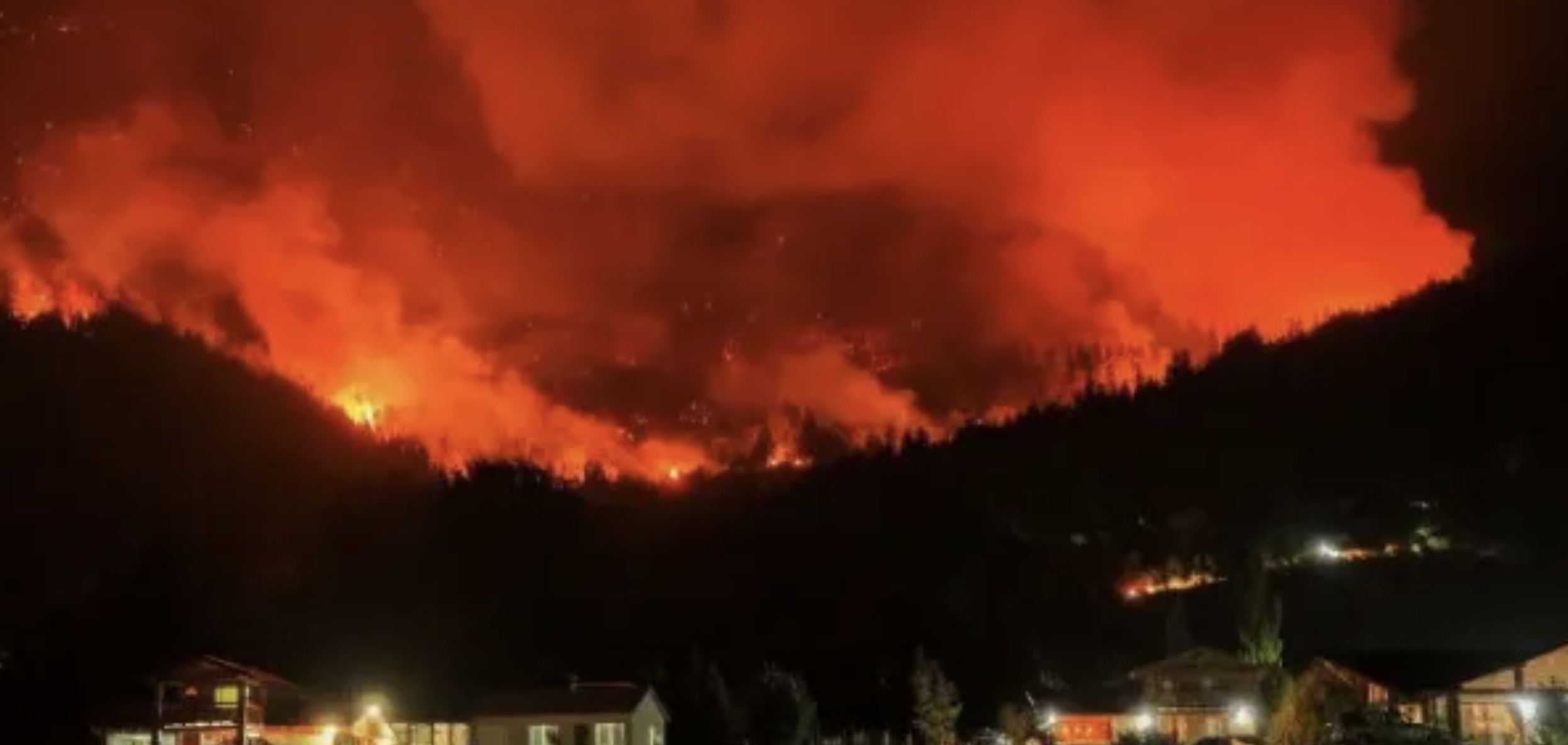
Buenos Aires, Argentina — Wildfires continue to rage in southern Argentina, burning tens of thousands of hectares of forest in the Patagonia and Chubut provinces.
According to the governor of Chubut, Ignacio Torres, over 400 firefighters, healthcare workers and security forces are in the area to support fire suppression efforts, which were hampered over the weekend due to inclement weather.
The first large fires started on January 5 in the Chubut village of El Hoyo and quickly spread into Patagonia’s largest national park, Parque Nacional Los Glaciares.
The total damage caused by the fires is currently estimated at around 30,000 hectares (about 74,000 acres) in Chubut alone, according to Agencia Presentes.
Damage estimates for Parque Nacional Los Glaciares are still being updated, as the fires have spread in complex patterns and fire fronts remain actively shifting.
Ecological impact
Greenpeace, conducting a large-scale operation to survey the fire-affected areas in Chubut, described the damage as a devastating ecological and scientific loss.
Hernán Giardini, campaign coordinator for Greenpeace’s Forests program, said last week: “Much more prevention is needed, more inspections, more firefighters.”
According to the latest update from the National Parks Administration, 400 brigade members are currently fighting the fires. The National Fire Management System suggests that at least 700 personnel are needed to cover the 5 million hectares affected.
The affected areas, which include the national parks Los Glaciares and Los Alerces, are both part of UNESCO World Heritage sites. As of now, UNESCO has not issued a response to the catastrophe.
According to FireRisk Heritage, strong dry southerly winds are intensifying the fires, causing already severely dry temperatures to exacerbate even further.
The fires are so intense that they can be seen from satellites and distant vantage points.
Greenpeace reported that some areas may partially recover within 50–100 years, while the full restoration of biodiversity and old-growth forest structure could take up to 400 years. Certain areas may never fully recover, as the ancient trees and conifers, some over 3,000 years old, have been lost forever.
Government response and further criticism
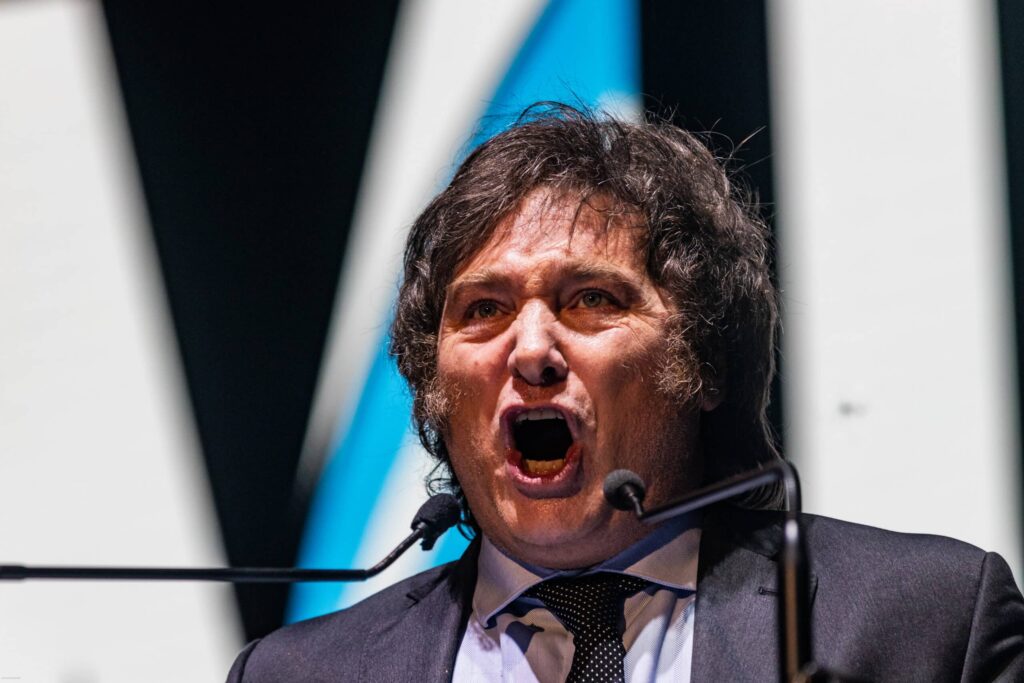
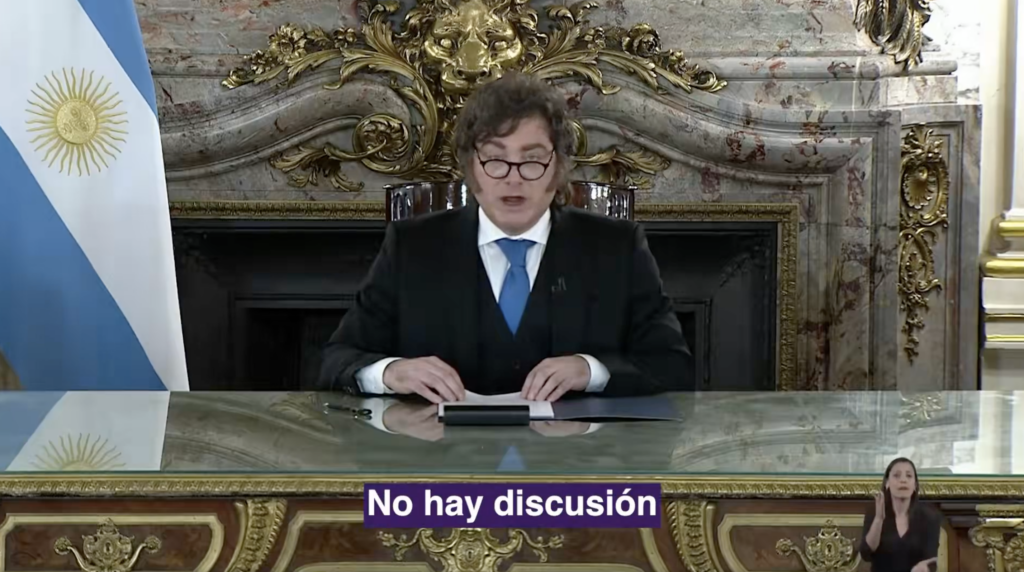
Argentine President Javier Milei praised the firefighters on his X account, calling their work “nothing more heroic than risking your life to save others.”
However, recent budget cuts to the national fire mitigation service, Servicio Nacional de Manejo del Fuego (SNMF), have drawn public criticism.
Due to Milei’s budget slashing reforms, Fundación Ambiente y Recursos Naturales (FARN) reported that the SNMF budget will see a real‑term reduction of 69% in 2026 compared with 2023 and 53.6% lower than 2025. These figures represent a tangible decline in funding amid rising wildfire risks, leaving the SNMF as one of the most underfunded agencies in the country.
In early 2025, the SNMF was transferred to the Ministry of Security, a move that critics argue weakened preventive and environmental approaches to fire management.
Previously, Argentina has already reported massive wildfires in Patagonia and Chubut regions in 2024 due to the dry conditions, high temperatures, and strong winds.
As wildfires become more frequent, criticism of Milei’s budget cuts to the SNMF remains ongoing, making them a key point of contention for environmental activists and analysts.
Julia Strada, political scientist, economist and representative of the Centro de Economía Política Argentina (CEPA), previously commented on the budget cuts on her X account, saying that Milei did nothing to prevent fires in the country.
She said: “The 2026 budget, if fully executed, would represent a 70.7% real-term cut compared with 2023.”
So far, Milei has not responded to the ongoing criticism, as his political focus remains on tackling inflation and he has remained in Argentina throughout this period.
Image source: Fundación Ambiente y Recursos Naturales