

Buenos Aires, Argentina — This month, the United States and Argentine governments launched the Andes-Atlantic Corridor, a bilateral cooperation initiative that will impact the strategic infrastructure of the South American country.
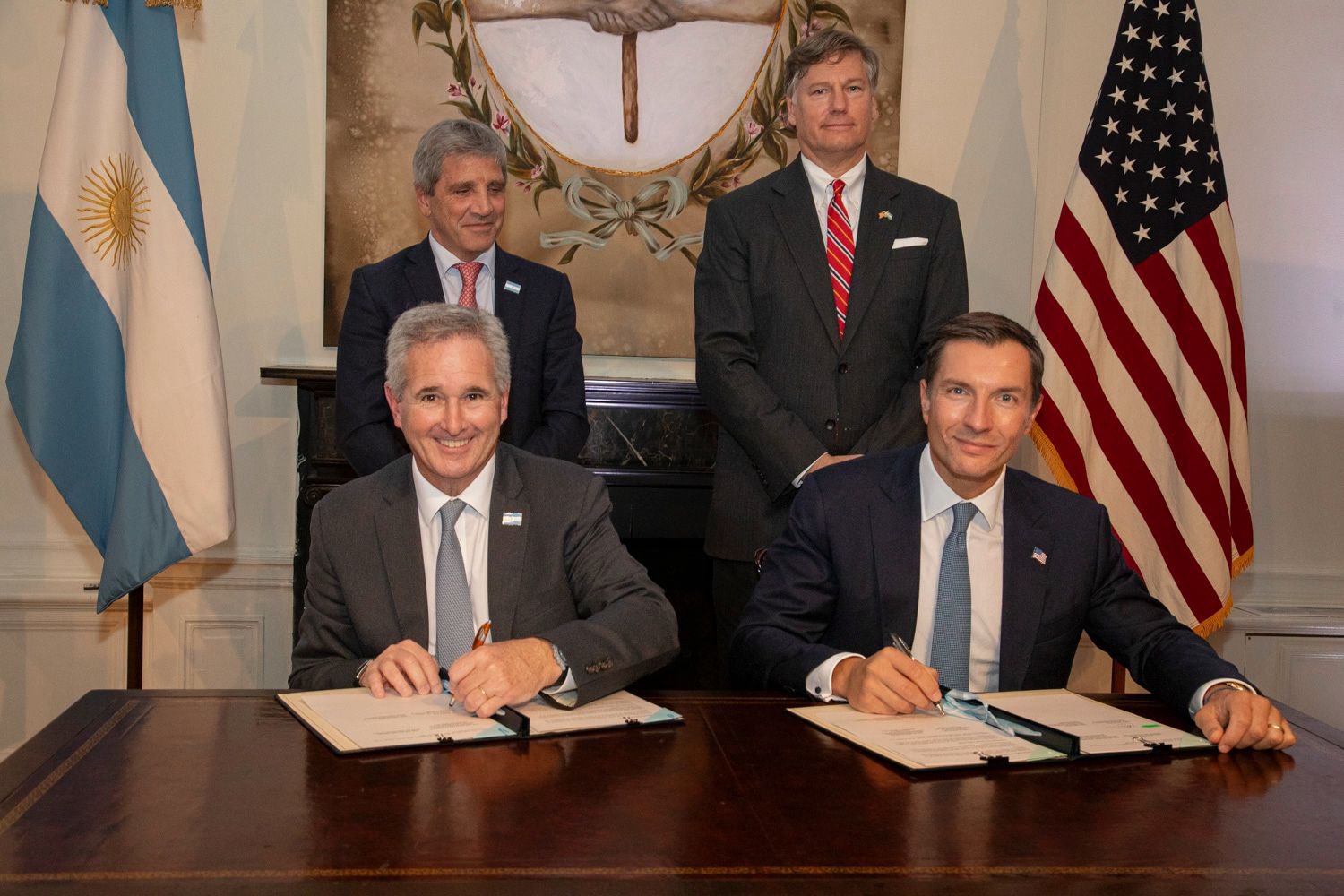
The agreement was signed on Wednesday, September 23, in New York by Argentine Foreign Minister Pablo Quirno and U.S. Deputy Secretary of State Christopher Landau, within the framework of the United Nations General Assembly.
The proposal includes financing of up to US$7 billion during 2027, according to a post by the Argentine diplomat on X. The funds will be provided through U.S. financing agencies rather than as a direct transfer, meaning that companies will be able to participate as bidders or subcontractors in the investments made in Argentina.
In this way, the agreement seeks to modernize Argentina’s energy, mining, transportation, and telecommunications infrastructure to achieve a greater connection with Western markets within the G7.
In exchange, Milei’s government committed to maintaining transparent and predictable regulatory frameworks for concessions under the Large Enterprises Investment Regime (RIGI) a fiscal tool to offer tax, exchange rate, and customs benefits for 30 years to large private investments in strategic sectors.
Yamil Quispe, energy specialist and president of the Neuquén Energy Companies Chamber, noted that this means that physical work will likely take some time to materialize.
“A large part of 2027 will probably be spent on regulatory frameworks, tenders, and awards,” he told Latin America Reports.
He added the agreement will significantly benefit Argentina’s oil industry. As the specialist explained, the South American country concluded a very strong year in the energy sector, marked by a record surplus of US$7.815 billion in 2025. Additionally, it exported 13% more hydrocarbons that year and reduced imports by 18% over the same period.
The expansion of unconventional oil and gas production allowed the energy balance to reach an estimated surplus of US$6.987 billion during the first half of 2026, the highest for a first half of the year on record.
“The agreement comes to strengthen this process,” commented Quispe.
Vaca Muerta: the star of the agreement
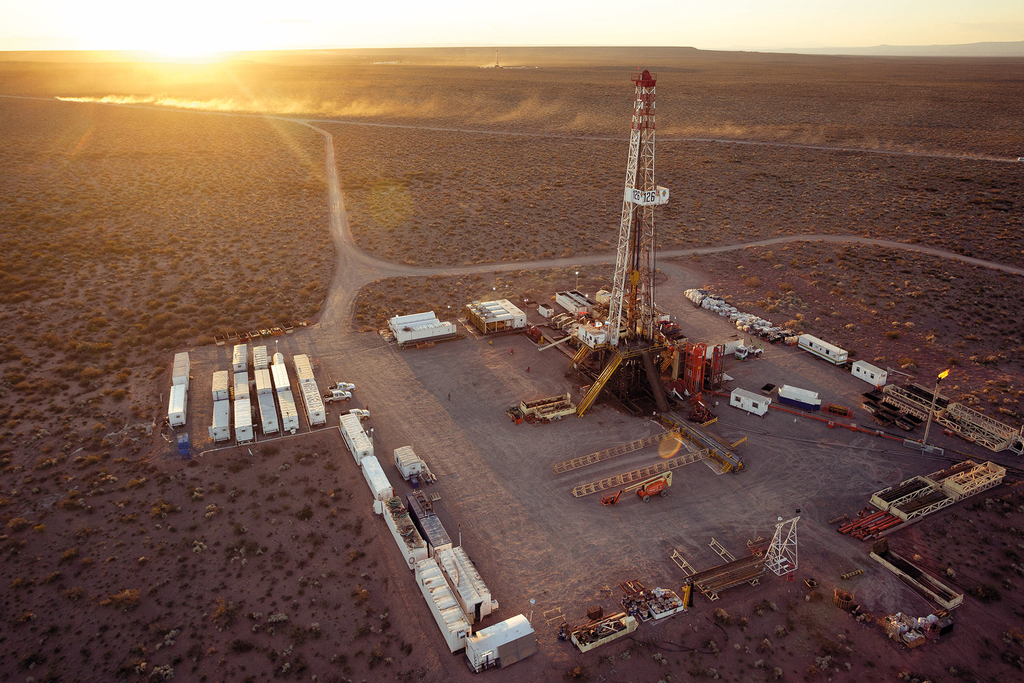
The corridor concentrates its projects in four major sectors, but the focus will be on the energy sector centered around Patagonia’s Vaca Muerta, one of the largest unconventional gas and oil reserves in the world.
In this area, the majority of the funding will be allocated to pipeline construction, electricity generation, and transmission to unlock the growth of oil and gas exports.
Out of the 7 billion dollars of investment, six will be allocated to the Liquefied Natural Gas (LNG) export project by the oil companies YPF, Eni, and XRG, said Paulo Farina, associate researcher of the Economic Development Program at CIPPEC. Only 1 billion will go to the rest of the projects
The specialist added that the investment agreement would be signed in 2027, but that not all the work would be carried out that same year.
According to both specialists, Washington seeks to generate confidence in the Argentine energy market through the support of U.S. official agencies, amid a power struggle with China.
Farina explained that this type of funding provided “some political insurance.”
“Here, everything is always framed within the dispute with Beijing,” he concluded.
Under the bilateral agreement, U.S. companies will also have priority over Argentine ones, raising concerns local Argentine suppliers could be at a disadvantage.
“A critical point is that the priority for American companies in critical infrastructure tenders (ports, railroads, minerals) could limit competition and exclude local or other origin suppliers in strategic sectors,” said Quispe.
The specialist indicated this issue will need to be worked on with local governments and business chambers to “prioritize the participation of all sectors in the industrial value chain.”
He noted that this issue will need to be addressed during negotiations for the planned projects.
“If the goal is to strengthen the Argentine industry, a second chapter of the proposal is needed.”
Featured image: Argentine Foreign Minister Pablo Quirno and the U.S. Under Secretary, Christopher Landau, on September 23, 2026.
Image credit: Argentine Foreign Minister Pablo Quirno via X.