

Buenos Aires, Argentina – Chinese-made cars are becoming an increasingly common sight on Argentine streets, a development which is becoming harder to ignore.
The rising popularity of these vehicles is bringing a variety of hybrid and electric models onto Argentina’s roads and is helping to modernize the country’s vehicle fleet, but their presence poses a serious challenge to the established car manufacturers who have been producing cars in the country for decades.
For many years Argentines were accustomed to European cars produced by Peugeot, Renault, and Fiat, as well as to the competition between the two American giants Ford and Chevrolet.
Nowadays, however, large SUVs made by BYD, Geely, BAIC, Dongfeng, and others are storming the Argentine market, arriving in droves to Argentine ports on ships embarking from the Far East.
Between January and September 2026, 39,954 vehicles manufactured by Chinese companies were registered in Argentina, a fivefold increase compared to the corresponding period of 2025, when 7,236 of these vehicles were registered, according to the Argentine Association of Automotive Dealers (ACARA).
“The Argentine automotive market is undergoing a shift in its composition, with less domestic production and more imports due to greater trade liberalization and the entry of new brands, especially Asian ones,” said ACARA’s President Sebastián Beato.
Currently, 10% of the new cars registered in the country are produced by a Chinese manufacturer, and this trend is accelerating.
Chinese brands have an even more established foothold in the fully electric vehicle market.
Between January and September, Argentina registered 6,033 battery-electric vehicles, of which at least 5,335 were produced by Chinese companies. Thus, Chinese manufacturers hold an 88.4% share of the market. BYD is leading the way with its Dolphin Mini and Yuan Pro models, along with JMEV, BAIC, Arcfox, Dongfeng, Geely, and Great Wall.
Chinese car manufacturers are also expanding into the hybrid vehicle market. According to ACARA’s ranking, brands from China account for at least 27,143 registrations, representing 45.1% of the 60,129 vehicles listed in that category. Among the leading companies are BYD, BAIC, Chery, Haval and MG, while newer ones such as Jetour and Changan are also making their mark.
Market openings and technological shifts
Policy changes by the administration of Argentine President Javier Milei facilitated the arrival of Chinese cars into Argentina. The government enacted a decree in January 2025 which reduced import duties on fully electric and hybrid vehicles from 35% to zero.
The exemption came with certain conditions: the number of vehicles that could be imported was restricted to 50,000 per year and the free-on-board (FOB) price at the point of origin also remained at or below $16,000. Nevertheless, the measures resulted in a wider variety of brands and models entering the Argentine market.
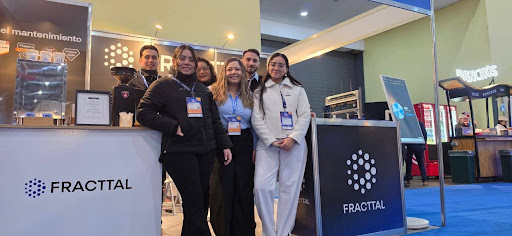
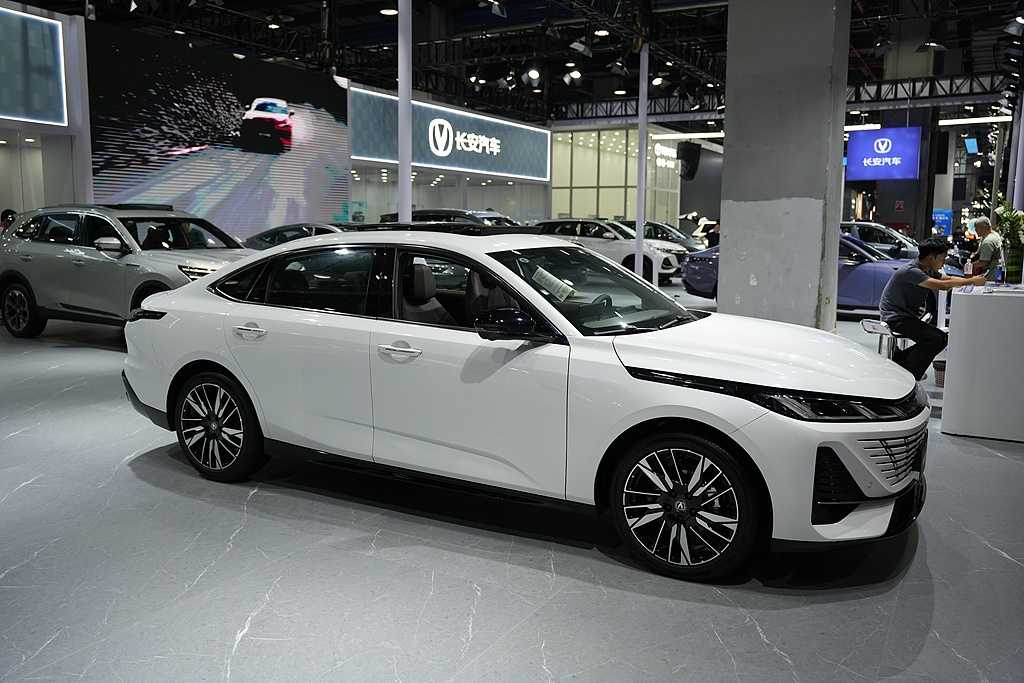
The strong interest shown in Chinese cars was evident at Expo Auto Chino, a trade show held in Buenos Aires from October 2 to 4. The organizers said that more than 33,000 people attended the event, where 26 Chinese brands exhibited around 100 different models. Nevertheless, not all of these cars are currently available for purchase in Argentina.
Regardless, large numbers came, even though an admission charge was required.
The program highlighted the features which set this new generation of Chinese cars apart. In addition to more modern powertrains, several of the models have well-designed interiors, large screens, a great deal of safety equipment, and advanced driver-assistance systems (ADAS).
These features make the cars competitive with, or downright superior to, vehicles assembled locally or those manufactured elsewhere in the South American economic bloc Mercosur when the prices are comparable.
“There is a consumer base willing to explore new alternatives and that increasingly values the ability to choose. The expansion of the product lineup is creating a more competitive market, with more technology, different types of engines, and options tailored to various needs and segments. The challenge is to continue creating the conditions for this diversity to take root so that Argentine consumers can access an ever-wider range of options,” Chamber of Automotive Importers and Distributors (CIDOA) President Ernesto Cavicchioli noted in a report seen by Latin America Reports.
There is, however, some doubt about the initial enthusiasm. The Argentine buyers are unsure whether many of the 26 brands present at Expo Auto Chino will still be available on the market in the coming years.
A car is a long-term purchase and having access to spare parts, maintenance, and reliable after-sales service is as important as the advanced technology in the vehicle.
Argentine automakers face growing pressure
Argentina has long been an important center of automotive manufacturing in Latin America, with its factories producing cars for Volkswagen, Renault, Ford, General Motors (Chevrolet), Toyota, and Stellantis, the company which makes Peugeot and Fiat in the country.
The market, however, is becoming increasingly difficult for these manufacturers.
Production figures clearly show a decline. According to ADEFA (the Argentina’s Automakers Association), Argentina produced 314,975 vehicles between January and September 2026, a 16.9% drop compared to the same period the previous year.
Although exports did rise by 1.6% year-on-year to 203,072 vehicles, this increase was not enough to make up for the falling production and domestic deliveries.
Herlander Zola, Stellantis’ South America president, has expressed concern about the group’s future in Argentina, telling Brazilian media outlet Exame that certain key decisions — concentrating productions at one of its two plants in Argentina, keeping both plants operating or even closing them both — would depend on future market conditions and the competitiveness of its products.
He also pointed out that labor costs in Argentina are roughly double those in Brazil. However, no closure of a plant has thus far been confirmed.
Martín Zuppi, CEO of Stellantis in Argentina, also seemed to suggest that Zola’s statements were taken out of context, stressing that “Stellantis Argentina’s official position is that production will continue uninterrupted at both the El Palomar and Córdoba plants, which are and will continue to operate normally.”
Zola’s statement nevertheless highlights the current pressure felt by Argentina’s automotive industry.
In Argentina, Chinese car manufacturers are expanding the range of vehicles they provide to consumers and bringing new technologies into the market. At the same time, the established manufacturers are being forced to examine their methods of competition.
Customers may benefit from having a greater choice and might even be able to obtain more competitive prices, but there are still some important worries about the long-term presence of these brands, the availability of spare parts, and the after-sales service.
For Argentina’s domestic car manufacturers the situation is more pressing, since they not only have to recover their sales volume but must also improve their competitiveness as new competitors enter the market. Chinese brands are no longer a rarity.
The key question now is whether Argentina can take advantage of these brands’ presence to modernize its car market without harming its own manufacturing sector.
Featured image: Expo Auto China was held in Buenos Aires, Argentina from October 2 to 4, 2026.
Image credit: CGTN en Español