
On November 1, a group of men attacked transgender women in Buenos Aires’ Palermo neighborhood, sparking outrage among human rights organizations and activists across Argentina.
The incident drew further attention after the perpetrators filmed the assaults and shared the footage on social media, accompanied by transphobic insults.
It has drawn attention to a trend of surging LGBTQ+ hate crimes in Argentina and renewed debate about lackluster protections for vulnerable communities and the impact of the Javier Milei administration’s anti-trans discourse.
Witnesses to the attack last Sunday reported that a group of men started following the women and assaulting them with sticks and stones, leaving at least 6 injured. There is no evidence that the attack was premeditated but the perpetrators arrived together, filmed the events and later shared the video online with captions such as “they’re calling me a ‘trans killer’ now.”
For Gabriela Ivy, an Argentine transgender activist, the attacks in Palermo reflect a broader pattern of violence against the trans community.
“This was not an isolated incident. These women had already suffered attacks by groups of young men, including this same group,” she said.
Indeed, the data suggests the attack was far from an isolated incident. According to the National Observatory of LGBT+ Hate Crimes, a joint public-private initiative, Argentina recorded 227 documented hate crimes against LGBTQ+ people in 2025, compared with 140 in 2024, an increase of 62%.
Transgender women were disproportionately affected, accounting for nearly 63% of all recorded cases. Amnesty International Argentina had also reported a 70% increase in anti-LGBTQ+ hate crimes in the first half of 2025 compared with the same period in 2024.
This violence reaches beyond physical attacks, says Andrea Baldwin, researcher and consultant at ILGA World, a global federation of more than 2,000 organizations advocating for the human rights of LGBTQ+ people worldwide.
“This is not only an attack on the bodily integrity of trans people. It is also a direct attack on their freedom of movement and their right to occupy public spaces,” she told Argentina Reports.
Baldwin describes the attacks in Palermo as an example of the growing normalization of violence against LGBTQ+ people: “We are witnessing acts of violence becoming acceptable, insignificant and part of the norm.”
According to the researcher, the public celebration of such attacks can have consequences extending beyond the immediate victims, reinforcing the perception that certain identities are less deserving of protection.
For activists like Ivy, the hateful discourse around the LGBTQ+ community is closely linked to the messages coming from political leaders and influential public figures.
“If people with so much power and influence can say these things, [young people] assume it must be true,” she said.
LGBTQ+ rights organizations have repeatedly criticized President Javier Milei for statements they describe as stigmatizing. In 2025, when in Davos, he stated that, “In its most extreme forms, gender ideology amounts to outright child abuse. They are pedophiles.”
For Ivy, the problem extends beyond the statements themselves. She argues that the perceived lack of consequences for public figures who stigmatize transgender people can encourage others to mimic their hostility.
For Baldwin, individual hate crimes need to be understood within their broader political and institutional context, without overlooking the responsibility of those who commit them.
“The existence of a political climate that enables discrimination and the responsibility of individual perpetrators are not mutually exclusive questions,” she explained.
Beyond political rhetoric, the Milei administration has also introduced changes affecting institutional protections for LGBTQ+ people.
In 2024, his administration announced the closure of the National Institute against Discrimination, Xenophobia and Racism (INADI). In 2025, he also announced restrictions on gender-affirming medical treatments and surgeries for minors.
LGBTQ+ activists argue these measures weaken institutional protections and leave already vulnerable communities at greater risk of discrimination and violence.
“The closure of INADI and the disappearance of mechanisms dedicated to monitoring and addressing discrimination have left fewer legal and institutional pathways through which LGBTI people can seek protection in the face of violence,” said Baldwin.
For the researcher, these changes can also affect how institutions document discriminatory incidents and respond to them. Without effective reporting mechanisms and reliable data, it becomes harder to identify patterns of violence and hold perpetrators accountable.
Asked what could be done to prevent further attacks, Ivy emphasized the need for changes in both public attitudes and institutional responses.
“The first thing that needs to change is society. We need to stop making transphobic jokes and start treating trans people as human beings,” said the activist.
She also called for greater access to employment, stronger responses from the justice system and accountability for violence committed against transgender people.
Baldwin, meanwhile, stressed the importance of restoring and strengthening anti-discrimination mechanisms, improving the monitoring of hate crimes and challenging narratives that portray LGBTQ+ communities as threats to society. She also highlighted the responsibility of civil society and the importance of public visibility.
With Buenos Aires’ Pride Parade taking place tomorrow, the question of who can safely occupy public spaces has taken on particular significance.
“Reclaiming public spaces is part of resisting the idea that LGBTI people should be excluded or made invisible,” Baldwin concluded.
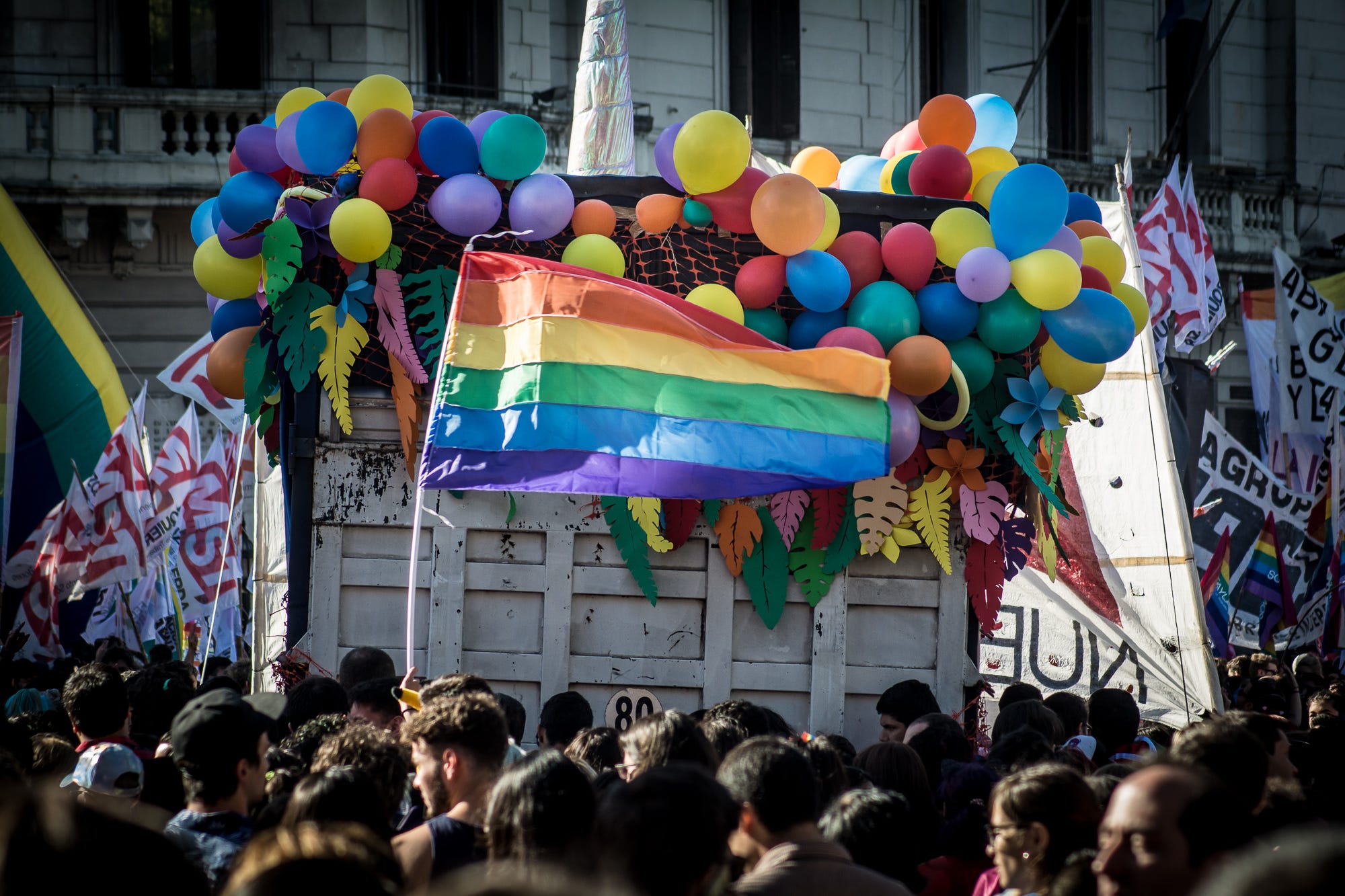
Featured image description: 2017 LGBTQ+ Pride Parade in Buenos Aires.
Featured image credit: Carlos Sainz Ochoa via Emergentes.