


Buenos Aires, Argentina – Health authorities across the globe are monitoring passengers repatriated from the cruise ship that left the port of Ushuaia, Argentina, after a deadly hantavirus outbreak drew attention to a rare and more dangerous variant endemic to the Patagonia region of southern Argentina and Chile.
Three passengers died following the MV Hondius’ voyage to Tierra del Fuego province on April 1, including a Dutch couple and a German woman, as investigators attempt to determine where the infection first occurred.
Two of those deaths were officially confirmed as hantavirus cases, a disease present in many countries around the world (including the United States), which is most commonly spread through inhaling aerosolized particles from rodent urine, feces or saliva.
However, the Andes variant is the only one with documented human-to-human transmission. As international concern surrounding the outbreak grew, alongside newly confirmed cases, World Health Organization Director-General Tedros Adhanom Ghebreyesus sought to reassure the public, stressing that the outbreak “is not the start of a COVID pandemic.”
Argentine health authorities and infectious disease specialists are now focusing on the travelers’ route through areas of Argentina and southern Chile where the strain is endemic.
“The infected person could already transmit the virus to another during the early stage of symptoms, which makes situations like the one aboard the ship so complex,” infectious disease specialist from Universidad de Cordoba in Argentina, Hugo Pizzi, told Argentina Reports.
Pizzi participated in the investigation of a 2018 outbreak in Epuyén, in the southern Chubut province, where Argentine researchers first documented chains of human transmission linked to the Andes strain after more than 30 infections were reported.
Initial international reports citing anonymous sources suggested passengers aboard the cruise may have been infected near a trash dump in Ushuaia, the capital of Tierra del Fuego province. However, according to the Health Ministry’s records, the Andes strain identified in the investigation “only has precedents of circulation in Chubut, Río Negro and Neuquén, and in southern Chile,” not in Tierra del Fuego province.
Health authorities are now reconstructing the movements of the Dutch tourist believed to be the index case. According to a Health Ministry report reviewed by Argentina Reports, the traveler arrived in Argentina in November 2025 and spent nearly four months traveling through Argentina, Chile and Uruguay before boarding the cruise ship in Ushuaia on April 1.
His itinerary included passages through Neuquén province and southern Chile, areas where the Andes variant is endemic.
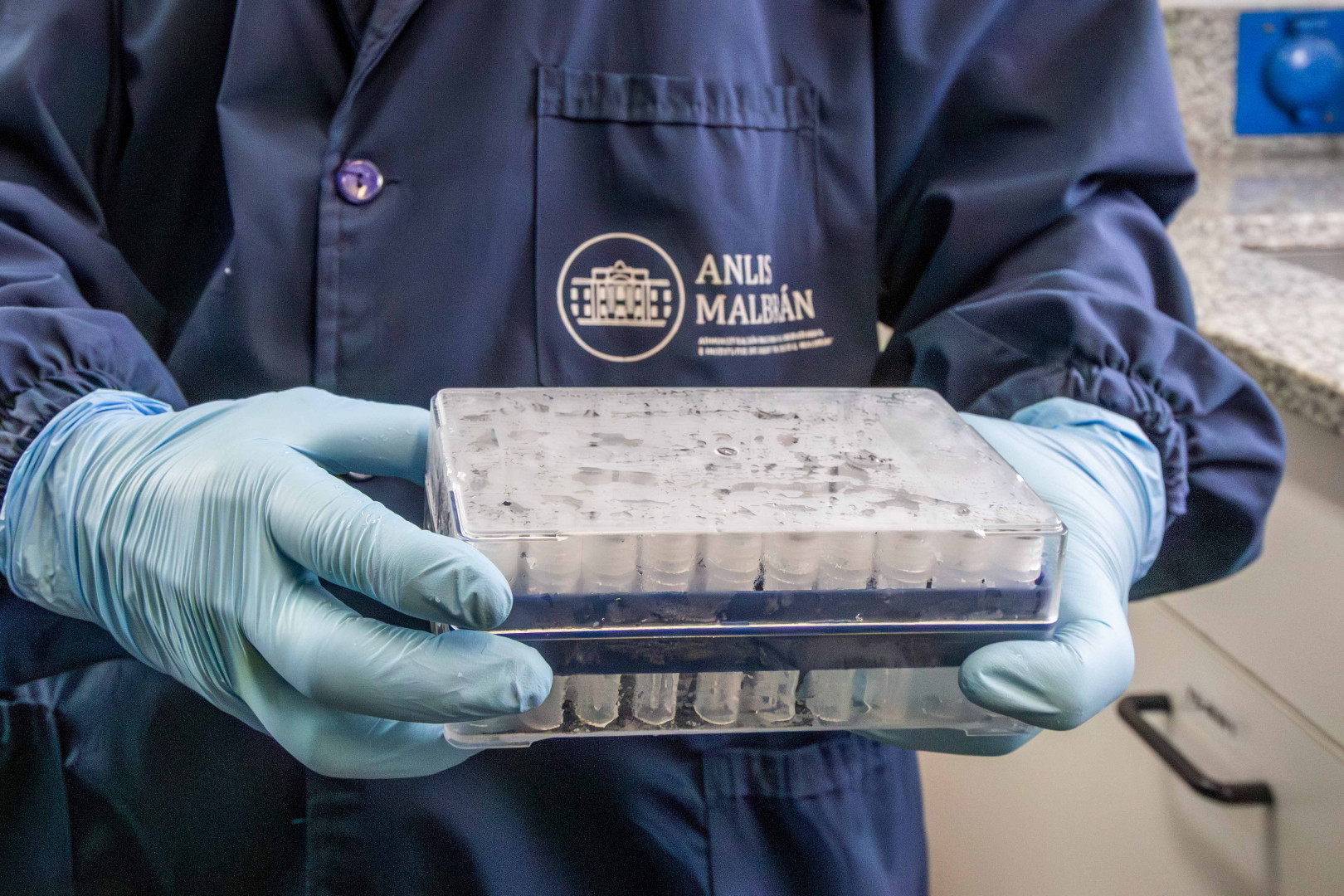
On the other hand, investigators from the Malbrán Institute are conducting rodent sampling and disease tracing efforts focused on regions visited before the passengers arrived in Ushuaia.
According to an official report, authorities are also monitoring close contacts who may have interacted with infected passengers during the first days of symptoms, a period researchers consider critical for potential transmission.
Meanwhile, provincial authorities in Río Negro confirmed a separate hantavirus case involving a 45-year-old patient hospitalized in Bariloche.
Officials told Argentina Reports that the patient remains under intensive monitoring and that close contacts are under preventive isolation. Authorities stressed that, as of the publication of this article, the case has no epidemiological link to the cruise outbreak.
The central question for investigators now is where, along a four-month itinerary through some of South America’s most remote endemic territory, the infection first took hold.
Featured image credit: Argentina’s Health Ministry website.